When Livelihoods and Conservation Meet: Voices of Farmers Benefiting from RTN’s Beekeeping Initiative in Ahanta
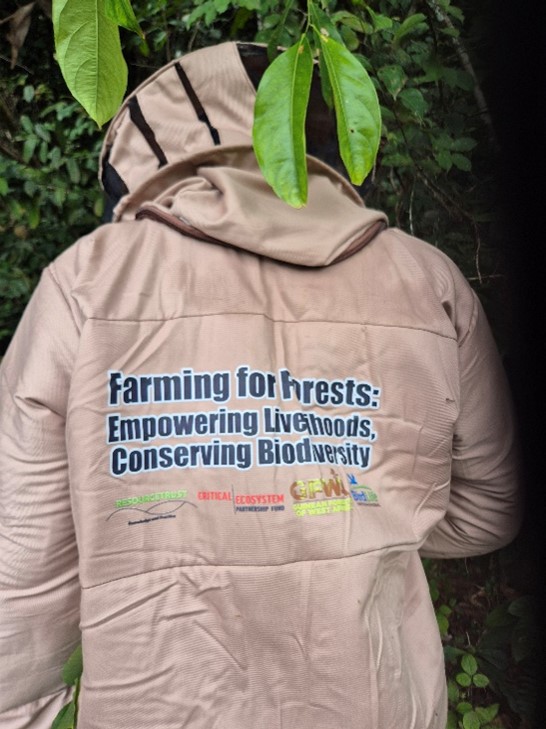
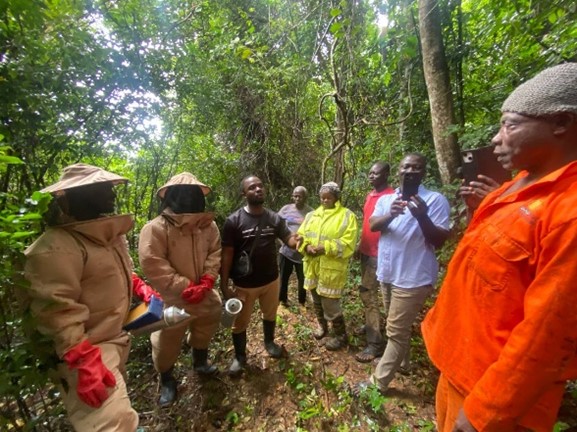
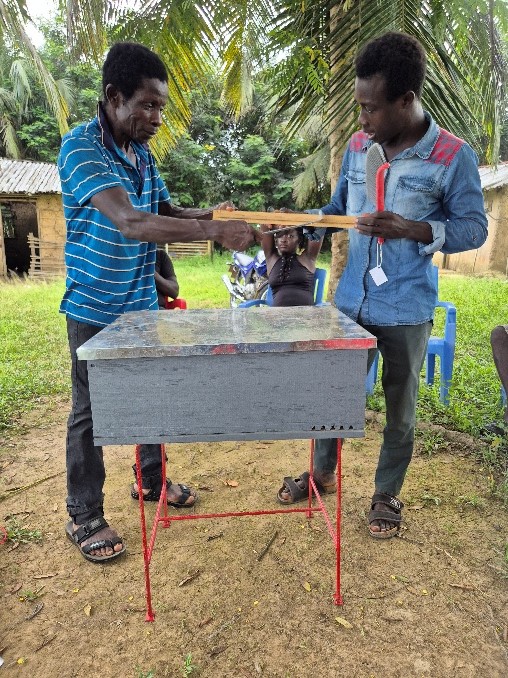
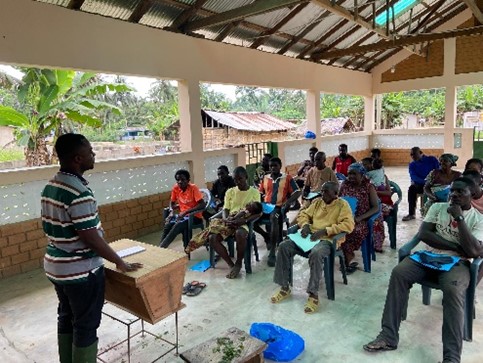
When the Resourcetrust Network (RTN) introduced its beekeeping initiative in Ahanta West Municipality, farmers saw an opportunity to diversify their income and protect the environment. The project trained 30 farmers in beekeeping, including hive management, community bee safety, honey harvesting, and best practices, while over 200 farmers across eight communities received broader best farm management training. Beyond economic benefits, the project encouraged conservation by maintaining forest buffer zones near Cape Three Points Forest Reserve. For Elijah Adu, a 26-year-old farmer from Adalazo, the initiative offered a lifeline. “I’ve always relied on rubber farming, but prices fluctuate, and income is uncertain,” he explains. Adding beekeeping to his work is beginning to reshape his future, providing stability and hope. Isaac Asmah, 32, from Asuboi, shares a similar story. “The RTN training gave me the skills and motivation to start beekeeping,” he says. “I’ve even constructed five additional hives on my own and now I’m building my own apiary. The lessons shared during the monitoring and training have fully equipped me, and I’ve confidently started putting them into practice. Currently, I am fully guaranteed with an additional source of income.” For Isaac, beekeeping is more than a livelihood; it’s a way to protect ecosystems while creating opportunities for his community. Sam, 62, also from Asuboi, spent decades cultivating rubber. Married with five children, he once considered clearing a forest buffer zone to expand his farm. “Many thanks to RTN who provided the beehives to give us an additional livelihood and helped me understand the importance of buffer areas,” Sam says. “I had made the decision to convert the forest buffer zone to expand my rubber farming, but this beekeeping initiative changed that.” Today, Sam earns extra income while safeguarding biodiversity. Eunice Kwofie from Asuboi community explains the income from honey, now pays for her children’s education and healthcare. Her story shows how giving women direct assets and control can transform families. “Unlike past group-based efforts that didn’t work, RTN gave me my own hives,” she says. “This isn’t just a project; it’s my business.” Other farmers like 54-year-old Christian Sarfo and 22-year-old Isaac Sulley believe RTN’s approach of giving individual training made the process practical and easy to apply, unlike previous group-based efforts. “With RTN, each of us received our own hives and training. That made a big difference. I now feel responsible for my hives and have even constructed additional ones,” Sarfo says. Isaac sees benefits beyond income as he indicated the project has helped reduce farmers’ activities that degraded buffer areas. “In the past, people used to pass through my farm to access the forest, but since the beehives were installed, they avoid that route, probably because they fear being stung,” Isaac concludes. These stories show the power of balancing livelihoods with environmental care. When farmers are given the right tools and support, they don’t just earn more; they protect the forests that sustain us all. Through RTN’s initiative, families now have extra income, women are empowered, and vital buffer zones are protected. End